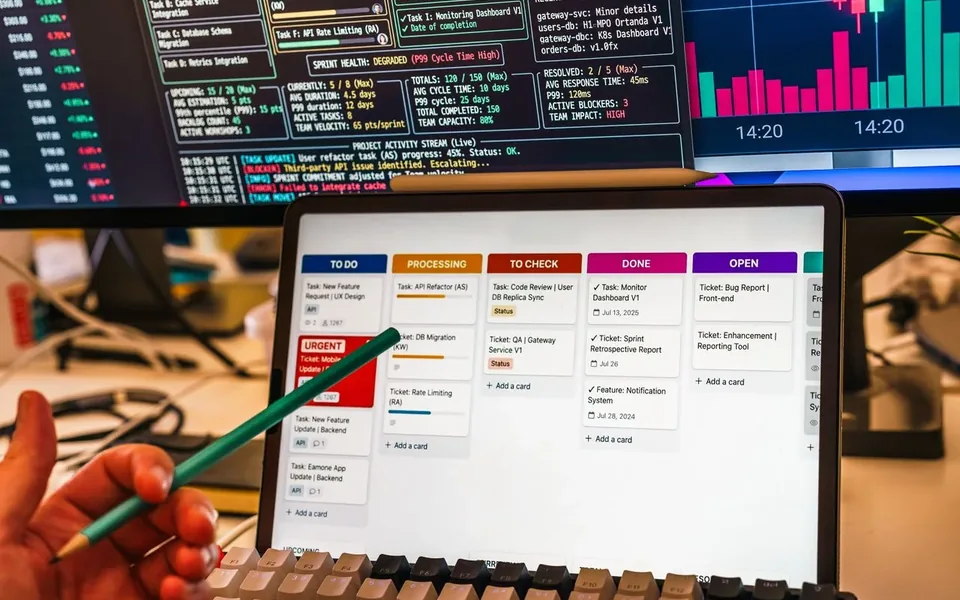
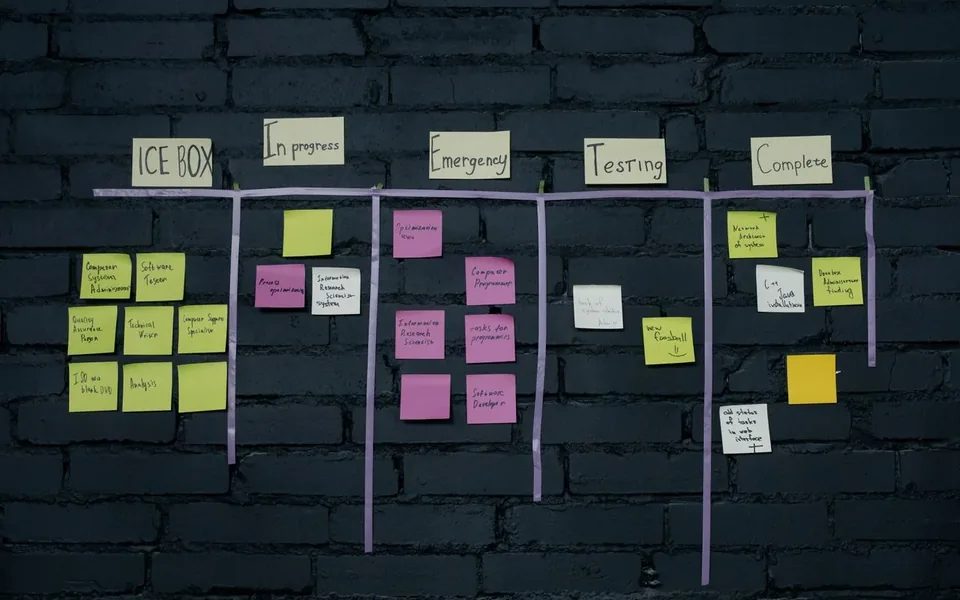
Technology challenges rarely exist in isolation. Web Tech Dynamics brings together software engineering, network architecture, infrastructure, systems integration and modern digital technologies to develop cohesive solutions for complex organisational requirements.
We begin with the underlying problem: how people work, where information moves and which constraints affect performance. Understanding those connections helps define what to build, what to improve and how each decision supports your longer-term technology direction.
Illustrative photography · licensed local media · not client projects
01
Operational systems beyond the spreadsheet
When departments maintain separate records, duplicated entry and inconsistent reporting can become an operational constraint. Bespoke browser-based software can bring workflows, data and responsibilities into a shared system. We consider data quality, user roles, migration and connections to existing applications before defining the architecture and delivery scope.
02
Connected customer & member platforms
A portal may need to connect customer requests with internal records, service teams and progress reporting. That requires more than interface design: application logic, APIs, access controls and dependable hosting must work together. We map the complete information journey so a proposed platform fits both its users and the systems supporting it.
03
Workflow architecture across the organisation
Enquiries, approvals, resource allocation and reporting often cross several teams and applications. For a business, educational setting or larger organisation, we can plan dashboards and administration tools around those dependencies. Clear ownership, shared data definitions and integration boundaries guide technical implementation and future changes.
04
Digital experiences connected to operations
A business website or online store should support the processes behind its public presence. Content structure, catalogue management and agreed commerce integrations need to align with administration and hosting. Branding, promotional graphics, AI-assisted image and video production, 3D visualisation and motion content can form part of the same brief, with audience, formats and review stages defined.
05
Automation & AI with a defined purpose
Document handling, repeated data entry and disconnected tools can create unnecessary processing work. We assess where scripts, API integrations, local AI tools or AI services could support the workflow. Input quality, privacy needs, exception handling and human review inform the design; the proposed approach is evaluated against the actual task.
06
Infrastructure diagnosis, reliability & capacity
An unreliable application may be affected by network connectivity, hardware, hosting configuration or the software itself. We trace these dependencies before proposing changes. Work can span network design and cabling, routing, wireless connectivity, domains and DNS, custom PC builds, upgrades, repairs, maintenance and Windows or Linux configuration. Performance and capacity requirements guide testing and longer-term planning.
Website Factory · In development
Give your next idea a home.
For a tailored system, explore our solutions. For a future self-service website, discover Website Factory — an independent product in development.
Every digital experience begins with an idea. Discover how thoughtful design, engineering and connected technologies transform concepts into practical solutions.
01 / Connect the possibilities
Discover the right problem.
Understand the idea, requirements, challenges and opportunities. Bring the people, purpose and practical constraints into focus.
02 / Give the idea a structure
Design with the whole system in mind.
Plan the user experience, architecture, functionality and technical approach. Make each connection clear before building.
03 / Engineer every connection
Develop something that works.
Build software, websites, integrations and connected digital systems. Turn a considered plan into a useful working experience.
04 / Ready for the real world
Deliver, learn and improve.
Test, refine and deploy the finished solution. Support a confident handover and keep improving as real needs evolve.
A clear path from diagnosis to delivery
Plan the system. Implement with purpose. Improve with evidence.
Strategic planningEstablish the business problem, current architecture, dependencies and constraints. Agree priorities, technical options and a phased roadmap, including ownership and support needs.
Technical implementationDevelop, integrate or configure the agreed solution. Review interfaces, migration, access and deployment requirements, then test the relevant workflows, devices and operating conditions.
Ongoing improvementUse operational feedback, diagnostics and agreed monitoring to identify refinements. Review performance, reliability and capacity as needs evolve; maintenance and support arrangements are agreed for each project.
Explore how applications, data, networks and infrastructure depend on each other. Select a layer to examine its role in an integrated solution.
Interactive technology lab
WTD / SYSTEMS LAB
CONNECTED DIGITAL SOLUTIONS01 — 06
THE CONNECTED CORE
The scenarios and architecture on this page illustrate possible approaches, rather than completed client projects. Connections represent technical relationships; scope, delivery and support depend on agreed requirements.
Read the technology guide +
Software Development
Frontend interfaces give people a clear way to work, while backend services handle business rules. APIs connect applications with data, automation and other systems.
AI processing can help classify information, prepare drafts and support decisions. Automation connects these steps to applications and data, with validation and human review suited to the task.
Networks provide the paths between people, devices and services. Router configuration, segmentation and traffic management help organise connectivity around the environment and its access needs.
Structured databases keep application records organised and accessible. PostgreSQL, considered queries and appropriate caching support consistent data access, while backup and recovery planning address resilience.
Cloud infrastructure hosts applications and the services they depend on. Deployment, resource management and monitoring help maintain an environment sized to the workload and agreed operational needs.
Security spans every layer of an architecture. Access controls, encryption and monitoring help protect information and infrastructure; the right controls depend on the risks, users and systems involved.